Introduction: Defining Power Where It Actually Matters
We often speak about watts as if they define the show. In the field, a festival crew sets up on a windy rooftop, points fixtures at the skyline, and waits for the night. The sky laser becomes the marker of place and time. Yet the spec sheet says “60 W” and stops there. A unit like the 60w laser light sounds decisive, but power alone does not tell the story. In a real scene, beam divergence, thermal roll-off, and mirror speed shape what the eye sees. Numbers on paper feel clean; air is not. Data from outdoor tests show that even small changes in humidity can cut visible reach. So a calm question: what are we actually buying—watts, or controlled light at distance?
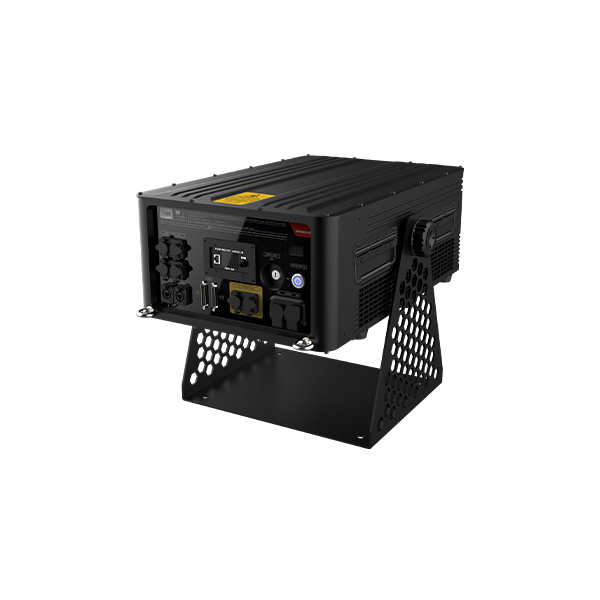
Consider a simple scenario. A city wants a clean vertical column from 1 km away, visible with no flare on fog. The baseline power looks enough, but the duty cycle, optical attenuation, and galvanometer scanners decide the final line, not the spec line. Field logs show power converters and cooling loops shift output after 10 minutes. Is the “60 W” still 60? Or is it a curve with a dip? (It matters.) Let us step through where older assumptions mislead, and what a careful choice should include next.
Where Traditional 60W Thinking Breaks Down
Why do 60W specs mislead?
The label says 60 W. In practice, the image lives or dies on stability under motion. When patterns sweep fast, galvanometer scanners face inertia. Mirrors heat. The beam widens. A stable line becomes a soft stripe at distance. Look, it’s simpler than you think: continuous power is not equal to effective brightness at the target. Divergence, measured in mrad, eats range far more than most buyers expect. Optical attenuation in air is also not constant; haze, dust, and city glow take their tax. Add the duty cycle: during dynamic cues, many rigs throttle to protect diodes. The user sees a fade. The spec never warned about that.
There is more. Legacy signal paths on DMX protocol can choke fine control timing. A better DSP controller smooths the path but needs tuning. Power converters under heat can sag, and safety interlocks cut power if temperatures spike. Outdoor-grade IP65 housing helps, yet thermal mass still pushes output into a new state after a long cue. If the goal is a crisp, far beam, then beam divergence and closed-loop feedback matter more than raw wattage—funny how that works, right? The conclusion is clear: a “60 W” rig without stable optics, thermal management, and verified response time is not a 60 W experience on-site.
From Spec to Practice: New Principles and the Road Ahead
What’s Next
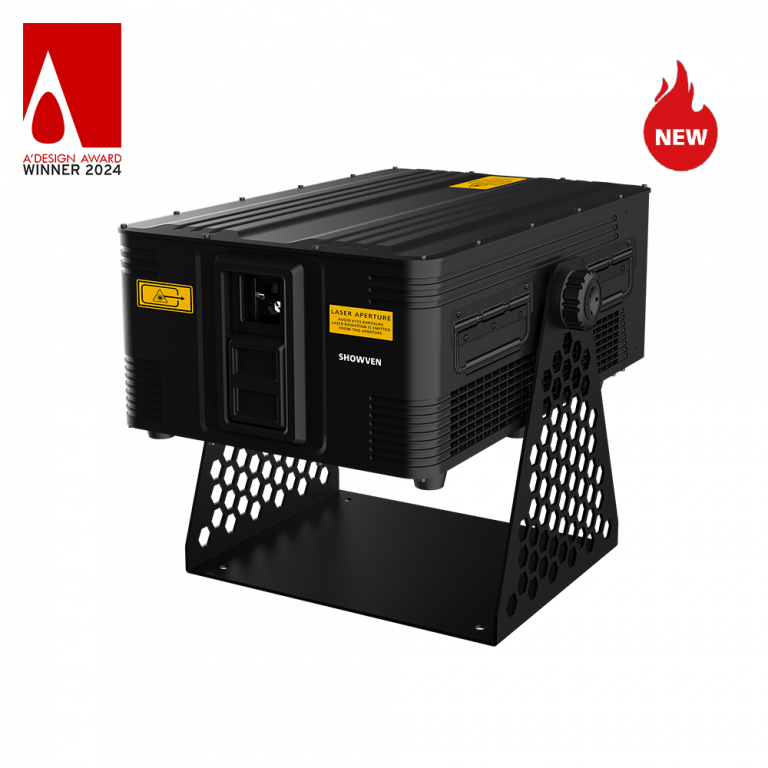
The next step is not only more watts. It is smarter watts. New control stacks use photodiode feedback and predictive thermal models to hold output steady under motion. The principle is simple: measure, correct, repeat. Closed-loop paths adjust current to keep beam profile tight as the head moves. Advanced optics shrink beam divergence without sacrificing safety margins. Edge computing nodes at the fixture run fast checks on mirror position, temperature, and power. They act before the eye sees drift—this is real progress, not marketing. When a city team mounts a laser for building façade tracing, this stability means lines stay crisp across long throws and shifting wind, with fewer do-overs.
Comparatively, think of two equal 60 W units. One is open-loop, one is closed-loop. The open-loop looks strong in the first minute, then softens during complex cues. The closed-loop holds form. Over a 15-minute sequence, the difference in perceived brightness can be dramatic. A fixture with smart cooling and a tuned DSP controller keeps the galvanometer scanners within safe speed and angle. It also manages the duty cycle to block thermal sag. In short, the future favors predictable output over headline wattage— and yes, that is not magic, just better engineering.
To choose well, use three simple evaluation metrics. First, ask for effective far-field candela at a fixed distance after 10 minutes of dynamic motion, not just initial lumens. Second, confirm beam divergence at 95% power with the actual show pattern, not a static dot. Third, verify closed-loop fault response time (how fast the unit corrects or shutters on abnormal heat or scanner error). These are practical, measurable, and aligned to visible results. With these in hand, a 60 W rig can perform like a real tool, not a gamble. For context and technical documentation, see resources from Showven Laser.
